

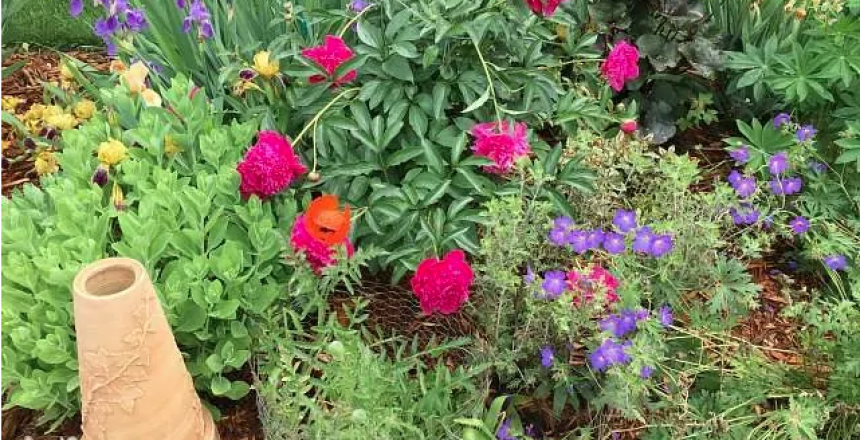
Sometimes you can get stuck in a rut and wonder how to keep your perennial gardens looking beautiful and full of color throughout the entire growing season, and even year round. Are you looking for perennials made easy? Like, super duper easy? Then this post is for you!
One of the biggest benefits of growing perennials in your garden instead of annual flowers is that perennials last for many years… but the downside is that perennial flowers only bloom for a short time.
They know something is wrong with the garden, but aren’t sure what they’re doing wrong.
They go on to explain that their perennial garden looks amazing for a few weeks every summer, but it’s dull and boring the rest of the year because nothing else ever flowers.
Don’t worry, this is very common for newbie gardeners, and it’s caused by something called flower fixation.
Ok, I just made up that term, but it’s a real problem! Let me explain…
THE BIGGEST PERENNIAL GARDENING MISTAKE
When it comes to planting a perennial garden, people focus waaaay too much on flowers.
Think about it. You walk into the garden center to buy perennials, and what’s the first thing that pops out at you …the flowers, right?
In fact, garden centers usually only sell plants that are in full bloom (they have chemicals to control the bloom times), and once the plants are done blooming, they quickly disappear from the store (or go on the clearance rack where I buy them, muahahaha!).
So, for example, when I walk into a garden center during the summer, this is what I will see…
And most people think, BAM, those flowers look amazing together so I’ll get them for my garden!
I mean, how could you go wrong with this amazing color combo, right?!?
But, since we love to buy perennial plants that are flowering, we tend to forget to think about how long those flowers will last, or what time of year they will bloom once they’re established in our garden.
Flower fixation is the number one cause of dull, boring gardens 49 weeks out of the year.
PERENNIALS MADE EASY
Foliage first!
The best thing to do when you’re working on building a perennial garden with non-stop color is to first focus on the foliage, and not the flowers.
For example, take a look at this garden area…
Even though there’s not really anything blooming, this perennial garden is still very colorful and beautiful.
That’s because it mixes different colors and textures of foliage, rather than everything just being plain, boring green.
There are tons of gorgeous plants out there that add wonderful color to the garden, even when they’re not blooming.
I mean, am I right… BOOM!
These days, perennial plants come in chartreuse, lime green, dark green, variegated, silver, burgundy, purple, pink, red… well, you can pretty much name your foliage color!
So, the next time you walk into the garden center, I challenge you to try to ignore the flowers up in your face, and focus only on the foliage of the plants.
Think about how you can mix the different foliage colors, textures, shapes and sizes into your garden.
Try not to plant perennials with the same color foliage next to each other, rather put foliage with contrasting textures and colors next to each other whenever you can.
If you already have a boring, green garden, then adding colorful foliage is the fastest way to rejuvenate the garden and add tons of immediate color!
Ok, NOW we can focus on flowers (color and bloom time!).
TIPS FOR CREATING AN EVER-BLOOMING PERENNIAL GARDEN
Ahhhh flowers, who doesn’t love to see a garden bursting with beautiful flowers?
But be careful, don’t let flower fixation set in again here.
The next thing to focus on is bloom time, NOT how the flowers look in the garden center. Make sure to read the plant tag on every perennial before you decide to buy it.
The tag will tell you when you can expect the plant to bloom once it’s established in your garden, how large the plant will get (so you don’t have an ugly, overgrown looking garden full of huge plants in a few years), and sometimes they even give you companion suggestions of what other plants look best when combined with this plant.
Ok, wait. Let me show you one more example to really drive this home… take a look at the garden area below.
Only one flower is blooming, but look at that amazing, bold contrast of the orange lily against the backdrop of dark purple perennials and variegated sedum foliage, and the variegated iris spikes in the middle.
I try not to plant more than 2-3 perennials that will be blooming at the same time next to each other in the garden. I like to layer in as much color, height and texture as I can so my garden areas are ever-blooming and gorgeous through the entire growing season.
Ever-blooming color, mixed with all of your colorful foliage, will create eye-popping perennial flower beds that will be the envy of all your friends and neighbors.
FOUR SEASON PERENNIAL GARDENS?
Flower fixation usually leads to gardens that are gorgeous during the peak of summer… but dull and boring in the spring, fall and winter.
So, as you select your garden perennials, think of what your garden will look like during the entire 12 months of the year, and plant accordingly.
Here are some snaps of a few of my perennial gardens through all four seasons of the year.
Moving left to right starting on top, these collages show you what spring, summer, fall and winter look like in each of these four garden areas.
MAINTENANCE TIPS FOR PERENNIALS MADE EASY!
Keep the weeds at bay: Mulching your perennial gardens will help keep the weeds from taking over, and make maintenance much easier.
Mulch also creates a lovely backdrop for perennials that really make the colors pop! I use a natural hardwood mulch that will break down slowly.
To make it a snap to pull out pesky weeds, I highly recommend getting yourself a Hori Hori knife and also a Cobrahead weeder. I’ve used a lot of gardening tools over the years, and these are two of the best hand weeding tools I’ve ever used.
Feed your plants: Perennials need a lot of energy to look their best, so make sure you fertilize them during the spring and summer months.
Blog Post Credit: Get Busy Gardening